Slow Fashion As A Strategy For The Tech Industry The slow fashion movement is not about clothes—it is a cultural rehearsal for the planned obsolescence in technology.
When The Boss Is Code We are witnessing the emergence of authority derived from computational opacity rather than human judgment—and this fundamentally transforms what "labor relations" can even mean.
The Aura Of The Original In an age where everything can be copied infinitely and for free, we paradoxically pay more for what resists replication—not because of technological nostalgia, but because presence and singularity have become the scarcest resources.
The Deflationary Storm For Lawyers And Consultants The billable hour was never really about time. It was about scarcity—the scarcity of trained minds capable of doing work that mattered. AI doesn't just make knowledge workers faster; it makes them less rare. And in economics, when scarcity evaporates, so does price.
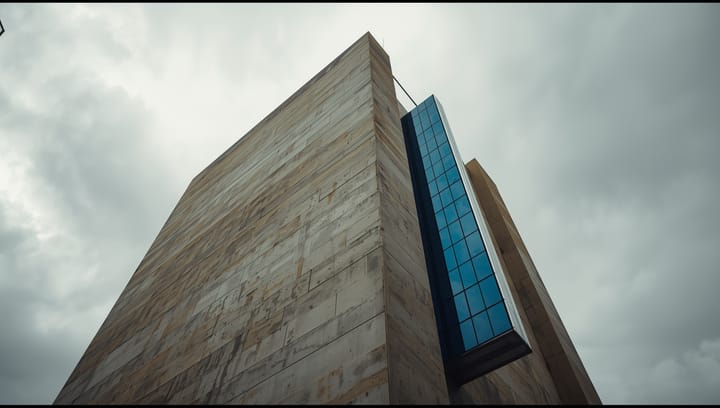
What Brutalist Architecture Knows About Resilience In an economy addicted to the cosmetic surgery of “disruption”—the Brutalist building asks: What if honesty were a competitive advantage?
Synthetic Empathy When a machine says “I understand,” it performs the grammar of care while remaining structurally incapable of it. The question is not whether this is deceptive; the important question is what happens to a society that begins to prefer the simulation.
The Strategic Value Of Silence Monastic architectural traditions were optimized for a tightly integrated ecosystem of silence, ritual, and communal stability rather than for loud group meetings.