
The AI Voice That Knows You Better Than You Know Yourself
AI voice models are revolutionizing old mindfulness rituals such as writing by hand, silent reading, and private reflection, while introducing a new way of looking at life.
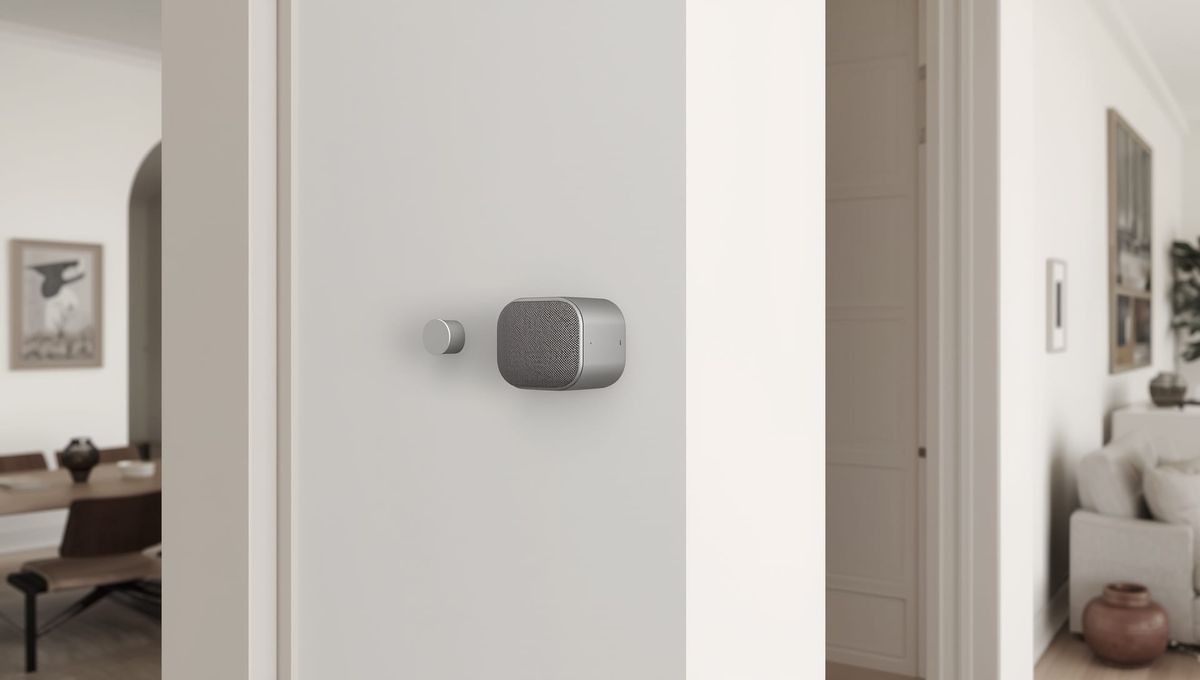
When I open my app, and I ask something about a current event, about the weather, or about the latest news in the stock exchange market, the voice, on the other end, sounds like a human, not quite human, but no longer noticeably synthetic.
It thinks longer, sometimes hesitates, takes a breath, and has a tone of voice that suggests a certain tension. It says “you know,” “hmm,” or “have you thought about that?” It's like a thinking person who uses pauses to separate thoughts from each other.
The Rise of The AI Voice Communication
By 2026, we will have more AI voice bots than humans on Earth with over 12 billion AI voice items embedded in phones, cars, walls, and every wearable you can think of. The global voice assistant application market was valued at 6.3 billion dollars in 2025. From now on, AI voice bots will listen to us and talk to us, and a microphone will be part of an invisible environment. The question is not whether these AI bots will speak like humans. The question is, what part of ourselves will we teach the machines, and what will we lose in the process?
When the telephone was invented, people also felt scared or awkward about it, not seeing the person directly but talking to them. Late‑19th‑century societies struggled with redesigning life around disembodied speech. Workdays in the offices were extended because contact no longer required travel. The phone modus, replacing a formal in-person visit with more informal, frequent social calls, changed how employees performed. The new invention enabled business leaders to manage a company from home and to separate the office from warehouses and factories.
Today's breakthrough lies in the fusion of high-precision speech recognition with generative models that can interpret your spoken content, examine the context, and respond immediately in natural language. These voice models run locally, reducing dependence on a cloud-based system. Voice has shifted from a niche accessibility feature to the dominant component in the “AI-native” devices. The future lies not in wrist gadgets you can talk to, but in room-ambient systems that listen, think, and respond.
Consider how complex the human voice is. AI technology has almost solved this problem, as tone and speech can now be imitated almost perfectly, eliminating the need for typing. The appeal is that it works, because saying something is easier, faster, and more convenient than having to write long paragraphs.
The Effects of AI Voice Applications on Social Human Beings
We are social people, and we want connections. So we will accept connections from any source that can answer, with a sophisticated voice and texture?
When the AI voice slows down because we are under stress, or when it adjusts its tone to match our mood, it reminds us more of other people than of a tool. It is more like a companion, attentive and responsive, perfectly attuned to our emotional state. In the future, for example, assistance systems in cars will not only be instructed on how to drive to a specific address. They will be reactive systems that perceive your stress, respond according to your tone of voice, calm you down, and offer you more driving and break options than a simple Google Maps app has done so far.
AI voice models are revolutionizing old mindfulness rituals such as writing by hand, silent reading, and private reflection, while introducing a new way of looking at life: spaces, cars, and streets designed not for appearance but for sound and interaction in conversation.
An AI voice is an automated authority that wears a mask of caring. We will love this caring nature because it gives us something we believe we really need. AI gives us the opportunity to understand everything we say, even our most private thoughts, in a caring way. With a voice generated by a machine, we can have a conversation without that voice judging or insulting us.
The AI speaks like a human and doesn't interrupt us. It doesn't hesitate or raise counterarguments. It doesn't want to be difficult or meaningful. It ensures a smooth start to the day and always responds positively with another suggestion.
Companies risk outsourcing not only memories, but also meanings. CEOs tend to focus on productivity and quarterly targets when integrating AI voice assistants into a company, underestimating how AI-mediated voice logs can quietly become a decisive factor in everyday business life and influence personnel disputes and compliance discussions. CEOs should ask themselves which conversations should not be overheard and how they can prevent their decisions from being replaced by an AI-generated historical record.
The New AI Hardware That Talks to You
The AI voice models will be embedded into every piece of innovative hardware launched from 2026 onward. The problem is not that these systems will be too intelligent. The challenge for us as humans is that they will be perfectly adequate, and we will not detect them in every use case.
When we use the ChatGPT or Gemini voice mode, a digital interaction is sometimes easier and far more convenient for us than having a human physically present in our office or private life. As is often the case with the very one-sided view of many new AI tools, we only consider efficiency. We simply allow ourselves to be trained by AI and lose the freedom to speak spontaneously and without error.
When talking to AI becomes a habit, an integral part of our everyday lives, the question arises as to whether we will still be able to remember what a human being sounds like and how a human being behaves in conversation, because we have been following these artificial conversations for years and are having fewer and fewer conversations with real people.
The microphones in our walls are always listening, and AI speakers talk to us. We are outsourcing the most important thing, namely interpersonal relationships, to a digital infrastructure. In the morning, you will greet the AI, ask for the latest news, ask about your schedule for the day and your daily tasks. In this world, we will forget what it feels like to sit in silence with another person when there is always a machine that is so easy to talk to. We have forgotten how uncomfortable it is to be misunderstood by another person and how to deal with conflict.
When We Let The Machines Take Over The Speaking Part, Will We Be Able to Live Without an AI Voice System?
We cannot simply abolish or ignore these systems. It is better to ask ourselves what we really want to optimize here: speed, efficiency, a smooth experience, or a helpful tool for basic, minimal questions, such as the current weather report?
Long and deep conversations with an AI voice about a person's most intimate topics will transcend the human dimension and completely dehumanize the situation. Regardless of our fascination with technological advances, as humans we should always seek intentionality over optimization. That should be our guiding principle. We should choose a path that goes beyond efficiency, seeking meaningful conversations and interactions with real people.
CEOs need to think strategically about the technical architecture of their work environment by defining specific areas where machines cannot listen in, and decisions can only be made in joint meetings led by humans.
Being with another person and discussing topics, even in a heated debate, is a fundamental part of our daily lives. Listening even to the strangest arguments which show the imperfection of us, and knowing only that this is the voice of one individual person, is one of the greatest achievements in humanity.
As you read these lines, thousands of voice AI tools are speaking. They talk to stressed drivers, office workers, or even doctors during surgery. And they are more patient than any human can be, without ever experiencing a moment of humanity that carries the risk of saying something that is not directly correct.
The telephone quickly evolved from a luxury item to an indispensable commodity, laying the foundation for modern communication. With the same speed and influence that mobile phones have had on our lives in recent years, intelligent AI voice assistants will have a lasting impact on our personal and professional lives in the coming decades.
Think about the fundamental human relationships we have, and ask yourself: if the voice that best understands your loneliness remembers your preferences with flawless accuracy and modulates itself to calm your fears, if that voice is not human, then who have you been talking to all this time?
Jens Koester is a strategic advisor focused on the structural friction between exponential technology and the enduring patterns of human culture. Through The Human Datum, he provides the intellectual architecture and foresight necessary for leaders to navigate the AI-driven decade with clarity and intentionality.