The Mathematics of Trust
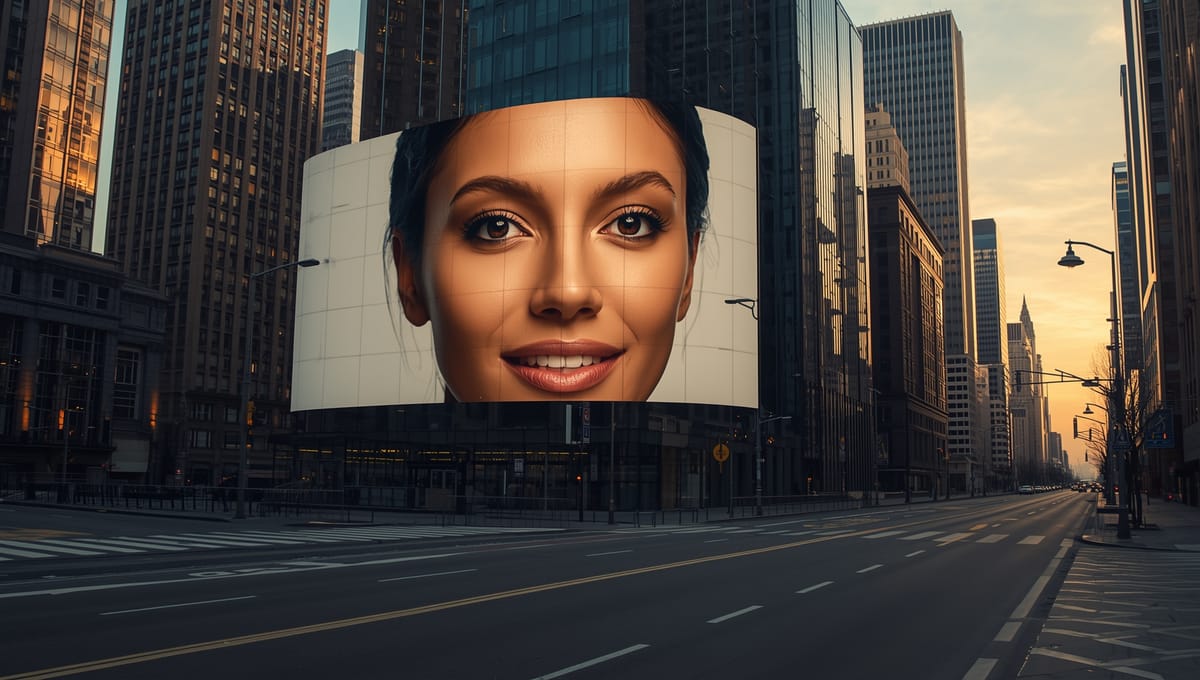
In 2026, technological advances mean that the human eye can no longer be trusted. Deepfakes are so convincing that they cannot reliably be separated from genuine media, even by experts.
The Collapse of Visual Truth
A CEO's video to shareholders, a politician's ad, your grandmother's voice—all can now be synthetically generated so convincingly that even experts cannot tell real from fake.
We are living through the death of phenomenological certainty—the end of the assumption that what we see with our own eyes corresponds to something that happened in the world. For the first time in human history, sight itself has become unreliable.
This uncertainty has created a new industry focused not on content creation, but on proving that content is authentic. As questions about trust multiply, a parallel economy emerges: not in making images, but in verifying them.
The Verification Industry
Brands, institutions, and governments are adopting a new trust system: every image, video, and document requires a mathematical proof of origin. Each becomes a signed, traceable asset that can be verified with the right validator.
The technical scaffolding is already being built: Public-key signatures bind content to a cryptographic hash. Hardware-rooted capture ensures that cameras and phones sign media at the moment of creation. Tamper-evident edit histories create an auditable chain of custody, where every transformation is logged and verified. Deep watermarking embeds integrity codes that survive compression but break under semantic manipulation.
This is the C2PA standard: the Content Credentials framework turns media into mathematical objects for verification. The central argument here is that reality now requires mathematical evidence to be trusted, reversing our older presumptions about truth.
The Human Cost of Verification
What are we giving up in this bargain? What does it mean for human experience when every encounter with media must be mediated by a cryptographic handshake? When is a photograph no longer something we simply look at, but something we must validate?
The problem is not merely technical. We are outsourcing trust—the most fundamentally human capacity—to algorithms and public-key infrastructure. We are replacing the messy, embodied, contextual practice of discernment with the cold efficiency of hash functions and signature validation.
For thousands of years, humans navigated truth through tone, body language, reputation, context, and the presence of witnesses. Trust was built not by mathematical proof, but through our cognitive and social capacity to evaluate it—slow, imperfect, vulnerable, but human.
When you buy a car or a house, you do not fully trust the person making the offer. Therefore, other human institutions are established, such as a board that helps tenants or an expert you can consult.
The verification industry offers perfect certainty at the cost of cognitive sovereignty. We defer judgment to validators, leading to intellectual atrophy disguised as progress.
And there is a darker implication: What happens to those who cannot afford cryptographic provenance? The technology is not free. It requires hardware, infrastructure, third-party verification services, and compliance with emerging standards.
This creates a reality divided into two tiers: verified content, which is trusted, and unverified content, which is automatically presumed false.
The Paradox of Algorithmic Trust
But there may be no alternative form now or in the future. The genie cannot be put back in the bottle. Deepfake technology exists, and it will only improve. To refuse cryptographic verification is not to preserve some romantic ideal of unmediated truth; it is to surrender the field entirely to chaos and manipulation.
The real question is how we implement these systems and what values we protect—not whether to adopt them. If verification becomes necessary, we must not assume it is enough on its own.
Mathematical proof can tell us whether a file has been manipulated, but it cannot tell us whether the content is meaningful, used ethically, or serves human flourishing. A cryptographically verified video of an emergency is still a video of an emergency. The signature does not make the case less real, nor does it answer the moral question of whether we should watch it, share it, or act on it.
Cryptographic provenance is necessary to prevent reality from dissolving into doubt, but we must clarify: it should not become the sole arbiter of truth. We must also maintain systems of contextual and relational trust.
The goal is to use signature validation as one tool among many, while still relying on human judgment.
The Question We Cannot Escape
The age of verification is here. Brands will spend billions on cryptographic infrastructure as they prepare for an era where third-party validators become as essential as accountants and lawyers. Insurance policies will require proof of origin for all public communications.
We are changing what it means to trust, what it means to believe, what it means to know that something is real.
In a post-truth economy, how much will you pay to know that something is real?
Jens Koester is a strategic advisor focused on the structural friction between exponential technology and the enduring patterns of human culture. Through The Human Datum, he provides the intellectual architecture and foresight necessary for leaders to navigate the AI-driven decade with clarity and intentionality.