
The Monastic Smart Home
How you live will affect how you feel. Architecture and design have adopted smart AI-supported techniques to optimize your home. Is this really necessary?
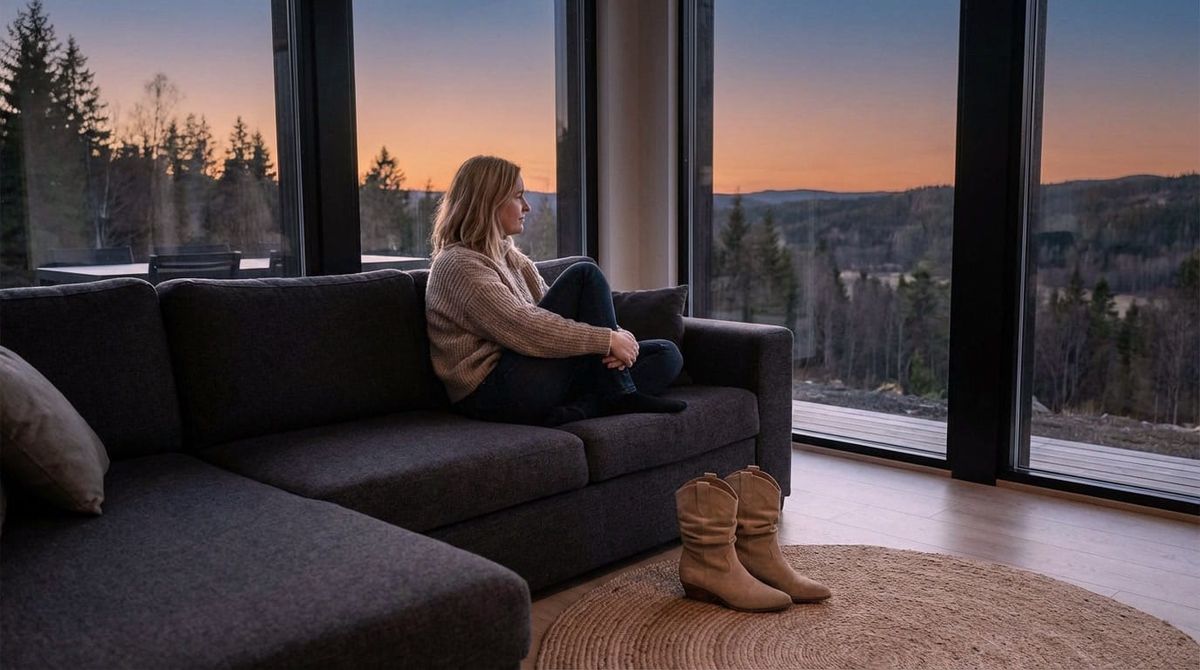
When you arrive home, the heating and oven switch on automatically to prepare your dinner, and the lighting dims as soon as you open the door. Your favorite jazz music begins to play, and a glass of white wine is chilled to the perfect temperature in the wine refrigerator and placed ready for you.
You ask your system about messages in your mailbox and a summary of the latest news while you are taking a shower. Curtains close automatically at 9pm, and you are sleeping in a well-temperature room, while the whole house and garage are surveilled by 18 cameras that report every move to your security company.
What sounds like a game simulation, like The Sims, can be your home now.
Why should we avoid the technical evolution at home to simplify our lives? The downsides of being always connected to AI applications are thankfully being discussed at the moment, as we seek to find a way for humans to survive in a world with a rhythm and control dictated by machines.
The Design Challenge
Architecture and design can act as a filter and buffer between you and the constant “always‑on” logic of the smart home, so that the house stays cognitively quiet even while the systems remain digitally rich.
To implement this in your home setup, follow your online and offline principles.
Define your calm: Prioritize spatial and sensory quiet and let smart devices work mostly in the background.
Protected areas: Borrow from monastic planning by creating enclosed zones in your homes, where notifications, screens, and voice agents are absent by design.
Live your way to simplicity: Use minimalist, integrated interfaces in walls and on surfaces so the tech is rarely seen, reducing FOMO and decision overload.
Think about the architecture of a Monastery. The core principle should be to establish micro environments, designed as rooms, with no screens, optimized for reading, analog writing, or boredom. Design for silence to reduce the world's noise and help your body and mind relax.
When you need to use panels to manage light, sound, air, or other details in your apartment or house, use minimalist panels with a single AI-supported application that is easy and comfortable for everyone living with you. Too many different panels and apps lead to distraction, confusion, and technical issues.
The New Technological Structure of Our Days
Our daily life can be easily structured into morning, midday, afternoon, evening, and night. All digitized and AI-supported systems and robots should follow this structure.
Let your surroundings be integrated in the daily flow, aligned with your needs throughout the day, and avoid a system that closes your doors or curtains at 5pm just because it might be getting a bit darker in the fall.
We can survive on this planet because we trust our senses. We smell, hear, feel, and see things when entering a condo or house. All technical equipment should serve our senses, to the individual needs of every person.
Light: Program the lighting and automated blinds to follow the sun’s daily rhythm.
Sound: Use high-quality rugs to keep the baseline sound level low.
Air: Program the automatic vents and air conditioning to suit your needs and adapt to sustainable power use in summer and winter.
The whole concept of a smart home needs detailed planing and expert knowledge. Just because AI LLM models can talk now, it should not be a must-have for you that you talk to them all day, or that a machine listens to every conversation you have.
As many of us also need our home for work, either in a separate room or at the kitchen table, all smart home devices should also respect this. And when your neighbor comes to visit you, ask yourself if a fingerprint entrance to open the door, with cameras following every step she makes, is in line with the life you are striving for as a human.
Slow Living with Analog Habits
Combining the latest tech gadgets without being posh or overwhelming, especially for visitors, will be one of the challenges you face when you think about your home of the future.
The cottage without any internet connection, at the lake, where you can hear, smell, and feel the rhythm of nature, is the slow-living alternative that often serves as an idealistic example of escaping the negative consequences of always being online.
Totally disconnecting cannot be a solution, nor a state of mind that accepts all the latest AI innovations in architecture and design without reflecting on what happens to you when you live in a smart home. A broad discussion of the need for a totally connected home should not be confined to closed elite circles or black-dressed espresso-nipping architects.
Imagine you have to move into a rented, fully automated condo downtown in a North American city. Think twice about the promises in the fancy realtor pitch.
Some technological devices and patterns will support you, especially when you come home after a long day of intense work. Delete or turn off everything that distracts you or disrupts the silent moments you desperately need for yourself.
Ask yourself: Does your environment serve your focus, or your distractions?
Jens Koester is a strategic advisor focused on the structural friction between exponential technology and the enduring patterns of human culture. Through The Human Datum, he provides the intellectual architecture and foresight necessary for leaders to navigate the AI-driven decade with clarity and intentionality.